
Exhibition Displays: How to Choose the Right Trade Show Booth Display
September 15, 2026 |by David Dalton
Exhibition Displays: How to Choose the Right Trade Show Booth Display
Whether you need a back wall or an accessory for your Toronto trade show, an exhibition display can meet your display needs.
But what are the best exhibition displays for a trade show booth?
The answer depends on your booth size, event schedule, transportation needs, branding goals, and how much flexibility you want from one event to the next. Exhibitors often consider pop-up exhibition displays when quick setup and portability are priorities. In contrast, modular exhibition displays can provide greater flexibility for exhibitors who need to adapt their booth to different spaces.
Tradeshow Booth Direct offers display solutions designed to help businesses create an organized, professional exhibition environment while keeping practical considerations such as setup, graphics, storage, and transportation in mind.
Let’s take a look at your options.
| Key Takeaways
● Exhibition displays help define a trade show booth and communicate a brand quickly. ● Pop-up exhibition displays are worth considering when portability and fast setup are priorities. ● Modular exhibition displays provide greater flexibility for changing booth configurations. ● A modular display for an exhibition booth can combine walls, graphics, counters, shelving, lighting, and media elements. ● Booth design should begin with the exhibitor’s goals rather than simply the available display styles. ● Keep graphics simple, readable, and visually consistent. ● Always confirm venue rules, booth dimensions, shipping requirements, and setup procedures before ordering. ● Reusable hardware and replaceable graphics can make a display more adaptable for future events. |
What Are Exhibition Displays?
Exhibition displays are physical structures and graphic systems used to present a company, organization, product, or service at trade shows, conventions, conferences, exhibitions, and other events.
Depending on the system, an exhibition display can include:
- Backwall graphics
- Fabric panels
- Counters and reception desks
- Shelving
- Product displays
- Monitor mounts
- Lighting
- Hanging signs
- Literature holders
- Storage areas
- Branded accessories
The display is more than a decorative backdrop. It can also help define the booth space and create a logical environment where visitors can see the brand, learn about products, speak with representatives, and take the next step.
Why Are Exhibition Displays Important for a Trade Show Booth?
A trade show floor can contain dozens or hundreds of exhibitors competing for attention. A clearly branded booth gives visitors an immediate visual reference for who you are and what you offer.
An effective display should answer three questions quickly:
- Who are you?
- What do you offer?
- What should the visitor do next?
That does not mean covering the booth with large amounts of text. In fact, simple messaging and a strong visual hierarchy can make a display easier to understand from across an exhibition floor.
A practical booth message might include your company name, a short description of your primary service, one key benefit, and a call to action.
What Is a Pop-Up Exhibition Display?
Pop-up exhibition displays are portable display systems designed for relatively quick assembly and breakdown. Many use expandable frames combined with printed graphic panels or tension fabric.
Their portability makes them useful for exhibitors who attend multiple events or need a display they can transport without the complexity of a permanent exhibit. Current display systems available in the market include lightweight frames, fabric graphics, wheeled cases, and tool-free assembly options. Review our Hop Up Fabric Pop-Up Exhibition display here.
What Are the Advantages of Pop-Up Displays?

Pop-up systems can be useful when:
- Setup time needs to be minimized.
- The display will travel between multiple events.
- Storage space is limited.
- The booth uses a straightforward backwall configuration.
- A company wants a reusable display system.
- Staff need to handle setup themselves.
They can also be combined with counters, lighting, monitor mounts, and other accessories to create a more complete booth environment.
What Are Modular Exhibition Displays?
Modular exhibition displays are systems made of individual components that can be configured or reconfigured to fit booth space and event requirements. Instead of treating the entire booth as one fixed structure, modular systems can incorporate different walls, counters, shelving, lighting, graphics, and media components. This makes them particularly interesting for businesses that exhibit at events with different floor plans. Our Hybrid Pro modular series is wide and varied. Take a look here,
Why Choose Modular Exhibition Displays?
Modular systems may be appropriate when an exhibitor needs:
- More layout flexibility.
- Multiple booth configurations.
- Product shelving.
- Integrated displays or monitors.
- Larger booth footprints.
- Dedicated meeting areas.
- Storage.
- Backlit graphics.
- Reusable structural components.
Some modular systems can be expanded or rearranged for different booth sizes, offering flexibility that a fixed display may not.
How Is a Modular Display Used for Exhibition Booths?
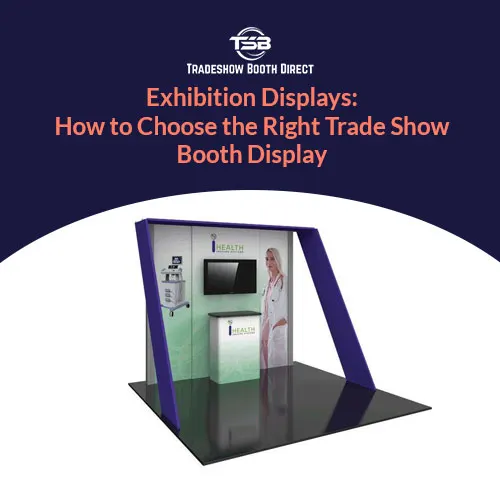
A modular display for exhibition booths is a configurable exhibit system designed to fit a particular booth footprint while allowing components to be arranged around the exhibitor’s objectives.
For example, a 10-foot booth might use a backwall, counter, lighting, and monitor. A larger 10-by-20-foot space could incorporate additional walls, shelving, meeting areas, product displays, or media components.
The key point is that the display should be designed around how the booth will be used. Let’s consider the various uses:
- Quick setup: Pop-up or tension-fabric system
- Frequent travel: Lightweight portable system
- Changing booth sizes: Modular system
- Product demonstrations: Shelving, counters, monitor mounts
- Strong visual impact: Large-format or backlit graphics
- Small booth: Compact backwall and counter
- Larger exhibit: Modular multi-component system
- Multiple events: Reusable hardware and replaceable graphics
How Do You Choose Between Pop-Up and Modular Displays?
Start with your exhibition schedule rather than the look of a particular display. Ask questions.
How often will you exhibit?
If you attend occasional events with similar booth dimensions, a straightforward pop-up system may be sufficient. Frequent exhibitors with changing booth spaces may benefit from modularity.
How much equipment do you need?
If your booth primarily needs branding, a backwall may be enough. Product demonstrations, literature, shelving, screens, and meeting areas require more planning.
How will the display travel?
Consider the weight, packed dimensions, carrying cases, vehicle requirements, storage, and shipping.
Will your booth size change?
If you expect to use different spaces over time, a modular system can offer more configuration options.
Who will set it up?
A display that looks excellent but requires complicated installation may create unnecessary challenges for a small exhibiting team. Setting up a modular display takes more time and effort than a portable. Please watch this video to see how it is done.
How Should You Design Exhibition Display Graphics?
Graphics are one of the most visible elements of an exhibition display. The design should be easy to understand from both a distance and up close.
Start with one primary message. For example:
Company Name
- A short statement describing what you do
- Product or service benefit
- Website or QR code
Avoid turning the back wall into a brochure. Visitors generally do not have time to read several paragraphs while walking through an exhibition hall.
Practical Graphic Design Checklist
- Use your primary brand colours consistently.
- Keep the main headline short.
- Make important text large enough to read.
- Use high-resolution images.
- Maintain strong contrast between text and background.
- Keep logos clear and uncluttered.
- Avoid excessive text.
- Include one clear call to action.
- Check artwork dimensions before printing.
- Proofread every phone number, URL, and headline.
- A good design should support the conversation, not replace it.
How Can You Make a Trade Show Booth More Functional?
A display should not only look good; it should support what your staff and visitors need to do.
Consider dividing the booth into simple zones:
Branding Zone
Use the main backdrop or overhead signage to identify the business.
Engagement Zone
Leave enough open space for staff to greet visitors and demonstrate products.
Information Zone
Use counters, literature holders, screens, or product displays to provide additional information.
Conversation Zone
If detailed sales conversations are part of the event strategy, consider incorporating seating or a small meeting area.
Storage Zone
Keep personal belongings, packaging, and excess materials out of sight whenever possible. The goal is to avoid creating a booth that looks impressive but is hard to navigate.
What Should You Consider Before Ordering Exhibition Displays?
Before purchasing or renting a display, collect the event specifications.
Exhibition Display Planning Checklist
-Confirm booth dimensions.
-Check height restrictions.
-Review venue display regulations.
-Determine whether the booth is inline, corner, peninsula, or island.
-Confirm electrical requirements.
-Check whether internet access is needed.
-Determine shipping and delivery deadlines.
-Identify setup and dismantling requirements.
-Measure available storage space.
-Decide who will install the display.
-Prepare final artwork early.
-Confirm replacement graphic requirements.
-Plan transportation between events.
These details can influence the display design just as much as branding does.
Are Exhibition Displays Worth the Investment?
The value of an exhibition display depends on how frequently it will be used and what it needs to accomplish.
A reusable display can potentially be used across multiple events. If the hardware remains useful while graphics can be updated or replaced, an exhibitor may not need to purchase an entirely new booth for every campaign.
For example, a company could keep its structural system while changing graphics for:
- A product launch
- A new service
- A seasonal campaign
- A rebrand
- A different target audience
- A new exhibition
Modular systems are particularly suited to this type of long-term planning because components can potentially be rearranged as requirements change.
How Can Trade Show Booth Direct Help with Exhibition Displays?
Trade Show Booth Direct focuses on display solutions for businesses preparing for exhibitions, trade shows, conventions, and promotional environments. The key consideration is not simply choosing the largest or most elaborate display, but selecting a system that matches the booth space, brand, transportation requirements, event frequency, and visitor experience.
Whether you are comparing pop-up exhibition displays, modular exhibition displays, or a modular display for an exhibition booth, start by identifying what your booth needs to accomplish. From there, you can determine the appropriate combination of graphics, structure, accessories, lighting, counters, and product presentation. The result should be a visually clear booth, practical for staff, comfortable for visitors, and reusable wherever possible.
People Also Ask
What is the most popular type of exhibition display?
Pop-up and tension-fabric displays are commonly used because they combine portability with relatively straightforward setup. The appropriate option depends on booth size, budget, graphics, and event requirements.
What is the difference between a pop-up and modular exhibition display?
A pop-up display generally emphasizes quick assembly and portability, while a modular system uses configurable components that offer more layout flexibility. Modular systems are often considered when booth sizes or presentation requirements vary between events.
What should a good exhibition display include?
A good display typically includes clear branding, an easy-to-understand primary message, appropriate graphics, and functional elements that support visitor engagement. Depending on the booth, this could include counters, shelves, lighting, product displays, or screens.
How do I choose the right trade show display?
Start by identifying your booth dimensions, event frequency, transportation needs, setup requirements, budget, and desired visitor experience. Then compare display systems based on those practical requirements, not appearance alone.
Are pop-up exhibition displays easy to set up?
Many modern pop-up systems are designed for quick assembly and require no complicated tools. However, setup procedures vary by system, so exhibitors should understand the assembly process before arriving.
Can modular exhibition displays be reused?
Yes. Reusability is one of the potential advantages of modular systems. Components can often be configured differently, while graphics and accessories may be changed as branding or exhibition requirements evolve.
What size exhibition display do I need?
The display should match the assigned booth footprint and venue restrictions. A standard 10-by-10-foot booth requires a different configuration from a 10-by-20-foot or larger space. Always verify the official event specifications before finalizing a design.
How can I make my exhibition booth stand out?
Start with a clear message, strong visual hierarchy, readable graphics, and an uncluttered layout. Add functional elements such as lighting, product demonstrations, or interactive media only when they support your main objective. A booth does not need to be complicated to be effective.
Your exhibition display materials may vary by application. Local height rules and the building type will help determine the ideal product offering and installation approach. This wide range of application options gives you fabrication choices that best fit your exhibition display requirements. Take display applications one at a time to properly fit the requirement.
Category: Trade Show Display, Exhibition Display
Tags: Exhibition displays, Pop up exhibition displays, modular exhibition displays, Modular Display for Exhibition Booth